
Premise
A dental emergency doesn’t wait for a convenient time; it often strikes in the middle of a workday in downtown Caledonia or during a quiet weekend at home. When a tooth is damaged beyond repair—whether by trauma, advanced decay, or a severe abscess—an emergency extraction becomes a vital, life-improving procedure. This article serves as a comprehensive guide for Caledonia residents, detailing the clinical necessity of extractions, the step-by-step reality of the procedure, and a professional roadmap for a smooth recovery that preserves your long-term oral health.
Introduction
Caledonia is a city defined by its resilience, from the hardworking heritage of its industrial sectors to the vibrant growth of its healthcare and tech hubs. However, even the most resilient Caledoniaian can be sidelined by the sudden, debilitating throb of a failed tooth. When pain reaches a point where it interferes with sleep, work, and daily life, the “wait and see” approach is no longer an option. An emergency tooth extraction is often viewed with apprehension, but in modern dentistry, it is a routine, painless, and highly controlled intervention designed to eliminate infection and prevent systemic health complications.
In the Greater Caledonia Area, access to emergency dental care is a cornerstone of community health. Whether you’ve suffered a sports injury at a local rink or a long-ignored cavity has finally reached the point of no return, knowing what to expect can significantly reduce anxiety. The process is not just about “pulling a tooth”; it is about careful diagnostics, compassionate anaesthesia, and a structured recovery plan that ensures the underlying bone and gum tissue heal perfectly. This guide will walk you through the ten essential aspects of emergency extractions, providing the clarity you need to navigate a dental crisis with confidence.
1. Recognizing the Signs of a Dental Emergency
Before a tooth is removed, there are usually several “red alert” symptoms that indicate the structure is no longer salvageable. In Caledonia’s busy urban environment, it is easy to dismiss a minor ache as sensitivity, but once the pain becomes “spontaneous”—meaning it occurs without a trigger like cold water—the nerve is likely in a state of irreversible distress. Recognizing these signs early can be the difference between a simple extraction and a complex infection that requires hospital intervention.
- Severe, Unremitting Pain: Pain that radiates to the jaw, neck, or ear and does not respond to standard over-the-counter medication.
- Facial Swelling: Any visible puffiness in the cheek or jaw area suggests an abscess or infection spreading into the soft tissues.
- Gingival Abscess: A “pimple” on the gums that may leak pus or a foul-smelling liquid.
- Mobility: A permanent tooth that has become loose due to trauma or advanced periodontal disease.
- Fracture Below the Gum Line: A tooth that has split so deeply that it cannot be reconstructed with a crown.
- Fever and Chills: Systemic signs that a dental infection is entering the bloodstream.
- Difficulty Opening the Mouth: Also known as trismus, this indicates inflammation in the jaw muscles or joints caused by infection.
- Persistent Bad Taste: A sign of chronic infection and tissue necrosis within the tooth or surrounding pocket.
2. The Emergency Diagnostic Phase
Upon arriving at a clinic like Dentistry At the Plex, the first step is a rapid but thorough diagnostic workup. The dentist must determine the exact anatomy of the tooth’s roots and the proximity to vital structures like the sinus cavity or the mandibular nerve. In Caledonia, modern clinics use digital imaging to provide immediate results with minimal radiation exposure, allowing the clinical team to plan the extraction with millimetre-level precision.
- Digital Periapical X-rays: These provide a detailed view of the entire tooth, from the crown to the very tip of the root in the bone.
- Panoramic Imaging: A wide-view X-ray that shows the relationship between all teeth, the jawbone, and the sinuses.
- Medical History Review: A critical check for conditions like diabetes, heart disease, or blood-thinning medications that affect healing.
- Visual and Physical Inspection: Checking for gum recession, bone density, and the presence of active infection.
- Pulp Testing: Confirming that the tooth’s internal nerve is non-vital or irreparably damaged.
- Antibiotic Assessment: Determining if a course of antibiotics is needed before the extraction to reduce swelling and localize the infection.
- Treatment Planning: Discussing the findings with the patient and outlining the steps of the procedure and the cost involved.
- Risk Assessment: Identifying any potential complications, such as curved roots or bone density issues.
3. Understanding Simple vs. Surgical Extractions
Not all extractions are created equal. Depending on the condition of the tooth and its position in the jaw, the procedure will fall into one of two categories. In Caledonia, we see a mix of both; simple extractions are common for visible teeth, while surgical extractions are often required for teeth that have broken off at the gum line or are impacted (stuck) under the bone.
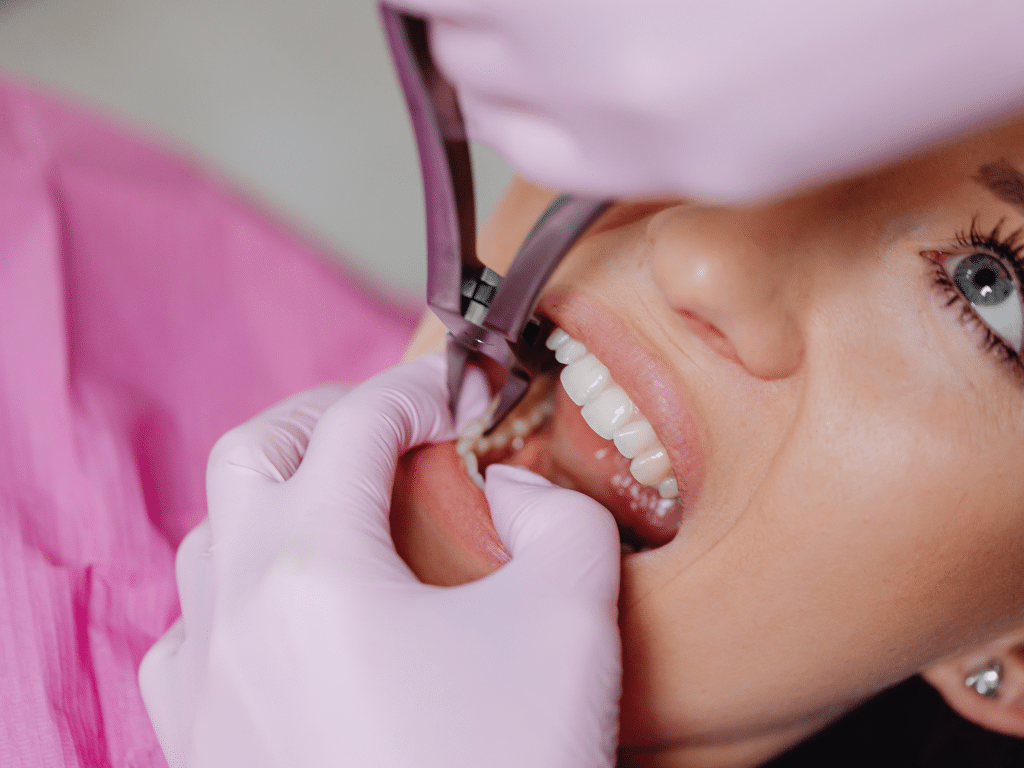
- Simple Extraction: Performed on a tooth that is visible in the mouth. The dentist uses an “elevator” to loosen the tooth and “forceps” to remove it.
- Surgical Extraction: Required if a tooth has not erupted or has broken at the bone level. This involves a small incision in the gum.
- Sectioning the Tooth: In surgical cases, the tooth may be cut into smaller pieces to allow for safer removal without damaging the surrounding bone.
- Suturing (Stitches): Surgical extractions often require dissolvable stitches to close the gum tissue and promote organized healing.
- Bone Preservation: Sometimes, “bone grafting” material is placed into the socket during a surgical extraction to prevent the jawbone from shrinking.
- Involvement of the Sinus: For upper molars, a surgical approach ensures that the thin wall between the tooth and the sinus remains intact.
- Instrument Usage: Simple extractions rely on leverage, while surgical ones utilize specialized drills and microsurgical tools.
- Recovery Variance: Surgical extractions typically involve a slightly longer initial healing period and more specific aftercare instructions.
4. Local Anaesthesia and Patient Comfort
The greatest fear regarding extractions is pain. However, with modern local anaesthetics, the only sensation a patient should feel is “pressure,” not sharpness or pain. At Dentistry At the Plex, we prioritize a “buffer” approach to freezing, ensuring the area is completely numb before the procedure begins.
- Topical Numbing Gel: Applied to the gum surface before the injection to make the needle prick virtually unnoticeable.
- Nerve Blocks: For lower molars, a block may be used to numb an entire quadrant of the mouth.
- Communication Cues: Establishing a “stop” signal (like raising a hand) so the patient feels in control at all times.
- Ambient Comfort: Many Caledonia clinics provide blankets, music, or television to distract the patient during the procedure.
- Post-Procedural Numbness: Ensuring the patient understands that the lip and tongue will remain numb for several hours following the appointment.
5. The Step-by-Step Extraction Process
Once the patient is fully numb, the extraction process begins. While it may sound intimidating, the actual “removal” phase often takes less than 20 minutes. The dentist works with the tooth’s natural anatomy, using physics and specialized instruments to gently disengage the tooth from the periodontal ligaments that hold it in the socket.
- Separating the Ligament: The dentist uses a thin tool to separate the tooth from the surrounding gum and ligament.
- Luxation (Loosening): Using an elevator, the dentist applies gentle pressure to “rock” the tooth back and forth, expanding the socket slightly.
- Grasping the Crown: Forceps are used to get a firm grip on the tooth once it is sufficiently loose.
- Controlled Removal: The tooth is lifted out of the socket with a smooth, steady motion.
- Socket Debridement: The dentist cleans the empty socket to remove any infected tissue or bone fragments.
- Curettage: A small tool is used to stimulate blood flow in the socket, which is essential for forming a healthy clot.
- Gauze Pressure: A clean piece of gauze is placed over the site, and the patient is asked to bite down firmly.
- Final Inspection: The dentist checks the extracted tooth to ensure no root tips were left behind in the bone.
6. The Critical First 24 Hours: Protecting the Clot
The single most important factor in a successful recovery is the formation and protection of a blood clot in the empty socket. This clot serves as a “biological bandage,” protecting the exposed bone and nerves while new tissue begins to grow. In Caledonia, we emphasize that the first 24 hours are the “danger zone” for a condition known as “Dry Socket,” which occurs if the clot is prematurely dislodged.
- Bite on Gauze: Maintain firm, steady pressure on the gauze for at least 30–60 minutes after leaving the clinic.
- No Spitting: The suction created by spitting can pull the clot right out of the socket.
- No Straws: Sucking through a straw creates negative pressure that is the leading cause of dry socket.
- No Smoking: Chemicals in tobacco interfere with healing, and the act of inhaling can dislodge the clot.
- Rest and Elevation: Keep your head elevated with pillows to reduce blood pressure in the head and minimize throbbing.
- Avoid Physical Strain: Do not engage in heavy lifting or intense exercise (like a hike up the Escarpment) for the first 24–48 hours.
- Gentle Mouth Rinsing: Wait a full 24 hours before gently rinsing with warm salt water; do not swish vigorously.
- Monitoring Bleeding: Some “oozing” is normal; however, if the mouth fills with blood rapidly, contact the emergency line.
7. Pain Management and Medication Protocols
As the anaesthesia wears off, some discomfort is expected. The goal of modern post-operative care is to “stay ahead” of the pain by taking medication before the freezing is completely gone. Caledonia dentists typically recommend a combination of over-the-counter anti-inflammatories, which are often more effective for dental pain than narcotic alternatives.
- Ibuprofen and Acetaminophen: The “gold standard” combination for reducing both pain and inflammation.
- Antibiotic Compliance: If you were prescribed antibiotics, you must finish the entire course even if you feel fine.
- Ice Pack Application: Use an ice pack on the outside of your face (20 minutes on, 20 minutes off) during the first 24 hours to prevent swelling.
- Avoiding Aspirin: Aspirin can thin the blood and lead to prolonged bleeding at the extraction site.
- Prescription Painkillers: Only used in complex surgical cases and must be taken exactly as directed.
- Managing Nausea: Take medication with a small amount of soft food (like applesauce) to avoid stomach upset.
- Nerve Sensitivity: Some patients feel “phantom” pain in neighbouring teeth; this is usually referred pain that subsides as the site heals.
- Hydration: Drink plenty of water (without a straw) to keep the body hydrated for the healing process.
8. Managing Swelling and Bruising
Swelling is the body’s natural inflammatory response to the “trauma” of an extraction. Interestingly, swelling usually peaks about 48 to 72 hours after the procedure, meaning you might look more puffed up on the second or third day than on the first. Caledonia patients should expect some minor bruising, especially if the extraction was surgical or involved a lower wisdom tooth.
- The 72-Hour Peak: Understanding that swelling increasing slightly on day two is normal and not a sign of new infection.
- Warm Compresses: After the first 24 hours of icing, switch to warm, moist compresses to improve circulation and reduce swelling.
- Sleep Position: Sleeping on your back with an extra pillow helps lymphatic drainage and reduces morning puffiness.
- Bruising Patterns: Bruising may travel down the neck or toward the chin; this is due to gravity and is a normal part of the healing cycle.
- Salt Water Rinses: Salt helps draw out excess fluid from the gum tissues, reducing localized swelling.
- Anti-Inflammatory Diet: Avoiding high-sodium foods that can lead to water retention and increased swelling.
- Jaw Stiffness: Gentle jaw stretching after day three can help alleviate stiffness in the masseter muscles.
- When to Call: If swelling becomes hard, red, or starts to close the eye, it requires immediate professional reassessment.
9. Dietary Restrictions and Nutrition for Healing
What you eat (and how you eat it) plays a massive role in how fast you recover. The “Soft Food Phase” usually lasts for about 3 to 5 days. In Caledonia, we advise patients to stock up on nutrient-dense foods that don’t require chewing, ensuring the body has the protein and vitamins necessary to knit the gum tissue back together.
- The First 24 Hours: Stick to “cool” soft foods like yogurt, pudding, or room-temperature smoothies (eaten with a spoon).
- Avoid Heat: Hot soups or coffee can dissolve the blood clot in the early stages; let them cool to lukewarm first.
- Protein-Rich Options: Scrambled eggs, protein shakes, and hummus are excellent for tissue repair.
- Avoid Grains and Seeds: Foods like rice, quinoa, or berries with small seeds can get trapped in the open socket and cause infection.
- No Spicy or Acidic Foods: Lemon juice, hot sauce, and salsa can sting the healing wound and cause significant irritation.
- Soft Pasta and Grains: After 48 hours, well-cooked pasta (like macaroni) or mashed potatoes can be introduced.
- Chew on the Opposite Side: Train yourself to do all the “work” on the side of the mouth away from the extraction site.
- Transitioning to Solids: Only return to crunchy foods (chips, nuts) once the dentist has confirmed the socket is fully closed, usually after two weeks.
10. Long-Term Recovery and Tooth Replacement
An extraction is the end of a painful tooth, but it is the beginning of a new phase of dental health. Leaving a gap in your smile can lead to bone loss in the jaw and cause neighbouring teeth to “tilt” or shift into the empty space. At Dentistry At the Plex, we view the extraction as step one of a two-step process to restore your smile’s full function and aesthetics.
- Socket Preservation: Discussion of how a bone graft can prepare the site for a future implant.
- The Three-Month Healing Rule: Generally, the bone takes 3–6 months to fully fill in the socket before an implant can be placed.
- Dental Implants: The “gold standard” replacement that looks and functions like a natural tooth.
- Bridges: A fixed restoration that uses the neighbouring teeth as anchors to fill the gap.
- Partial Dentures: A removable option for patients who have lost multiple teeth in an area.
- Preventing “Supra-eruption”: Explaining how the tooth above the gap may start to “grow” down because there is no opposing pressure.
- Speech and Function: Restoring the gap ensures that your speech remains clear and your ability to chew a full range of foods is maintained.
- Aesthetic Confidence: Closing the gap helps maintain the natural contours of your face and the symmetry of your smile.
Conclusion
An emergency tooth extraction in Caledonia is a transformative procedure. It takes a patient from a state of acute, life-altering pain to a state of healing and recovery. While the idea of losing a tooth can be difficult to process, it is often the most responsible choice for your overall health. By removing a source of chronic infection, you protect your heart, your brain, and your immune system from the constant burden of dental bacteria.
Recovery is a structured process that requires patience and adherence to professional advice. From the initial 24-hour clot protection to the long-term planning for a dental implant, each stage is designed to ensure you return to your daily life in Caledonia with a mouth that is healthy, stable, and ready for the future. Remember, an extraction is not a “loss”—it is a fresh start for your oral health.
Call to Action
Experiencing severe tooth pain or a dental emergency? Don’t wait for the symptoms to worsen. Contact Dentistry At the Plex for immediate, compassionate care.
- Name: Dentistry AT The Plex
- Address: 370 Argyle St S, Caledonia, ON N3W 2N2
- Phone: 289.960.0730
- Email: Send an email to [email protected]
- Website: Visit their website at www.dentistryattheplex.com.
Swift Relief and Expert Care for Caledonia’s Dental Emergencies.